

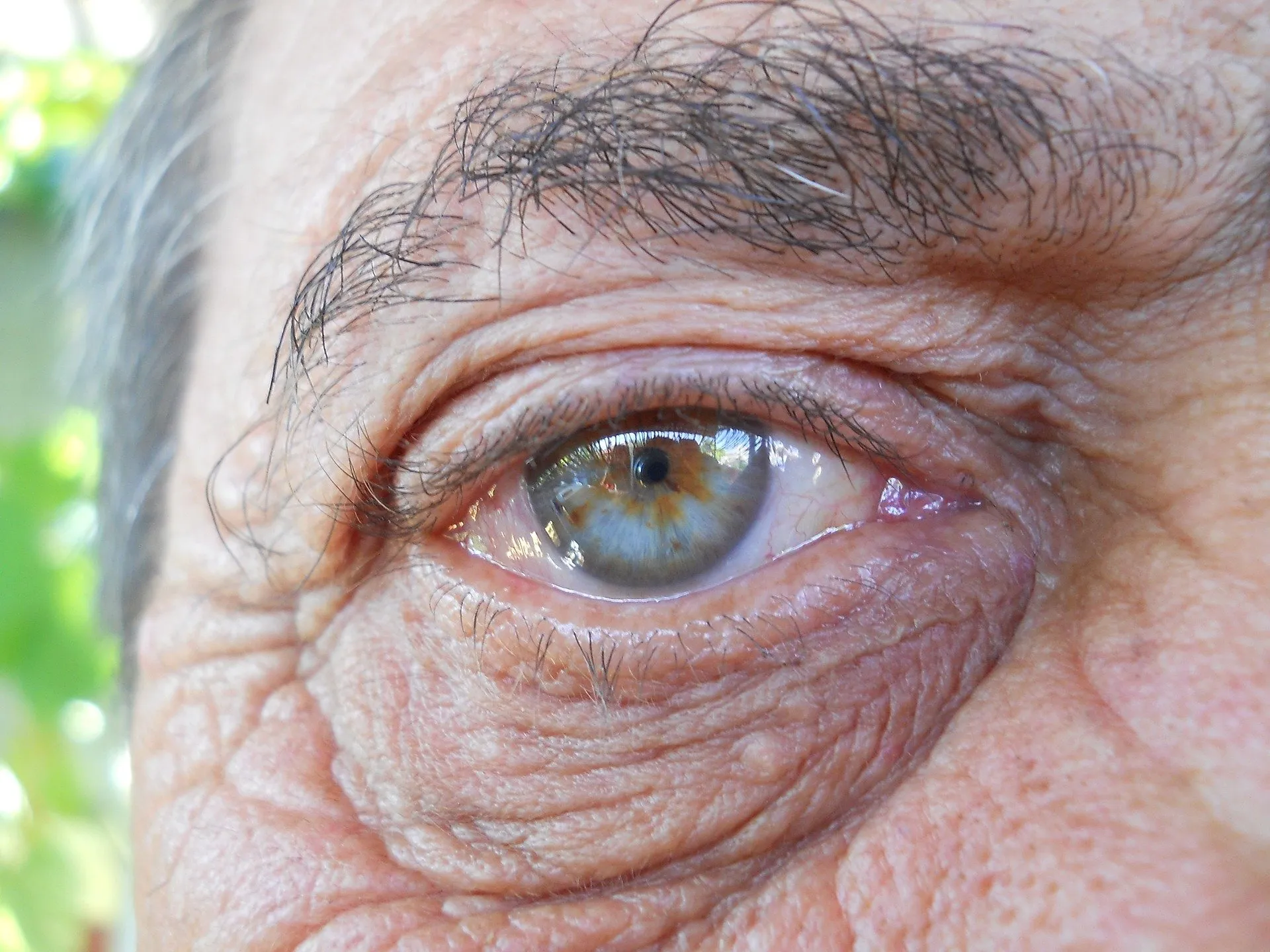
Yellowing eyes
Why are my eyes yellow?
Yellowing eyes are more common than you may realise. When you look at your eyes, you usually see a circle of colour nestled in a field of white. The white part of the eye is called the sclera. It is a protective layer that covers approximately 80% of the eyeball’s surface, forming the tough outer wall of the eyeball.
The conjunctiva is a thin mucous membrane that covers the sclera and also lines the inside of the eyelids. The conjunctiva is translucent (clear) and it carries a network of fine conjunctival blood vessels.
Good to have white sclera
Usually, if it is young and healthy, the sclera is white, which is why it is commonly known as the white of the eye. And we all want our sclera to be bright white. This makes you look younger, healthier and more attractive. It’s therefore no surprise when people get concerned that their eyes don’t seem to be as white as they used to be. Your whites could turn yellow, red or blue!
Ageing and yellowing eyes
If you have noticed that your eyes are yellowing, and you have counted a number of trips around the sun, it is likely that ageing is the cause. Yellowing or browning is caused by many years of exposure to ultraviolet light (UV), wind, and dust.
Ultraviolet light is dangerous and can cause yellowing eyes
Long-term UV exposure to the conjunctiva and sclera causes the collagen fibres of these tissues to fragment and clump together (“elastotic degeneration”). The conjunctiva yellows and thickens. This is most noticeable in the inner and outer corners of the eye (medial and lateral bulbar conjunctiva), as this conjunctiva is exposed to sunlight whenever the eye is open. Lifting the upper lid will usually reveal healthy white sclera because this tissue is always shielded from sunlight by the eyelid.
UV damage is usually most severe at the inner corner of the eye, as this tissue receives sunlight reflected off of the nasal bridge. Glasses can also focus rays of the sun onto this area of conjunctiva.
Pingueculae
Another cause of the whites of your eyes yellowing is the development of pingueculae.
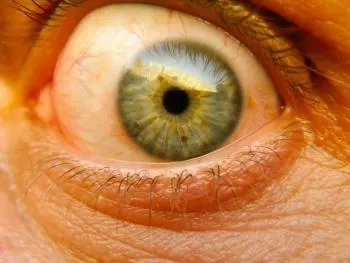
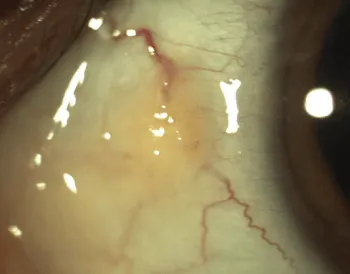
If the conjunctiva thickens enough, a mound of abnormal tissue becomes visible on the surface of the eye. A pingueculum is a yellow, raised growth, which is an accumulation of conjunctival tissue at the nasal (inner) or temporal (outer) intersection of the sclera and cornea.
These growths usually contain a combination of protein, fat, or calcium. Pingueculae are extremely common, are usually bilateral and appear yellow or red in colour.
Pingueculae can be troublesome
Pingueculae are asymptomatic, but if left untreated they can grow across the cornea, which is the clear window at the front of the eye. This leads to a pingueculum-pterygium transition, which occurs rarely, and is not as aggressive as a true pterygium, which is a growth of fleshy tissue with blood vessels – and with more matrix metalloproteinases (MMPs). MMPs comprise a family of enzymes which are active outside of cells, on the surface of cells, and between cells.
As a pterygium grows and/or becomes inflamed, you may experience dry and red eyes, blurry or distorted vision, grittiness and discomfort, and dissatisfaction with the appearance of the eye.
Limbal stem cell deficiency (LSCD)
Chronic inflammation of a pingueculum (‘pingueculitis’) causes corneal limbal stem cell loss. The limbus is the junction of the cornea and sclera in the eye. Stem cells in this area are vital for the repopulation of the corneal epithelium, as these cells enable it to repair and renew itself. They act as a kind of barrier of the limbus.
If LSCD continues, this will lead to persistent epithelial defects, corneal conjunctivalization and neovascularization, corneal scarring and chronic inflammation. All of these contribute to loss of corneal clarity, potential vision loss, chronic pain, photophobia, and keratoplasty failure.

Eye cancers may be responsible for yellowing eyes
If left untreated, it is possible for pingueculae and pterygia to develop into eye cancers. The medical term for this is ocular surface squamous neoplasia (OSSN). The development of an eye cancer can be heralded by rapid growth of a lesion, and/or a white plaque on the surface of the lesion (leukoplakia).
What are the treatment options for pingueculae and pterygia?
Mild pingueculae can just be treated with eye lubricants, and occasional short courses of weak steroid eyedrops. However, if a lesion is cosmetically bothersome, or if it transitions to a pterygium, then excision and conjunctival autograft surgery is performed. If OSSN is suspected, then excision biopsy is performed, and the tissue is sent for diagnostic evaluation.
So, when should you take yellowing eyes seriously?
There are several other reasons for yellowing sclera which you need to take seriously and seek medical advice: some are more serious than others. But most frequently, yellowing eyes will need medical advice.
Jaundice
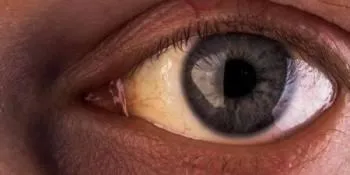
Jaundice is not a disease. The word ‘jaundice’ is derived from the French word ‘jaune’, meaning ‘yellow’. When an individual is jaundiced, the entire white of both eyes turn yellow. This is in contrast to sunlight exposure, which only affects the area of sclera visible between the upper and lower eyelids.
Yellow eyes can occur if you contract hepatitis, an autoimmune disease that attacks the body’s immune system. Hepatitis A, B and C viruses can infect liver cells, causing yellowing of the eyes. The medical term for this condition is conjunctival icterus, or sometimes scleral icterus.
Jaundice is a yellowing of the eyes and body in response to excessive accumulation of bilirubin pigment within the body, and is caused by staining of the conjunctiva by bilirubin. In general, yellowing of the eyes occurs at a serum bilirubin level of 30 micromols/L, and yellowing of the skin occurs at a level of 40 micromols/L. Bilirubin is a normal breakdown product of haemoglobin, and it is filtered out by the liver and excreted in the urine and faeces.
While jaundice itself does not impair vision, some conditions that cause jaundice can lead to complications affecting the eyes. It is important to contact your general practitioner or eye doctor if you notice your entire sclera turn yellow.
Yellowing eyes caused by Obstruction jaundice
Also, yellow eyes can occur when ducts that carry bile from the liver to the gallbladder becomes blocked by gallstones.
Specific medications
Included here are excess acetaminophen and prescription drugs like penicillin, oral contraceptives, chlorpromazine and anabolic steroids.
Acute pancreatitis
This refers to an infection of the pancreas. This too can cause eyes to yellow.
Hemolytic anemia
This is a congenital blood disorder that occurs when the blood lacks healthy red blood cells. There are other blood disorders that affect the production and lifespan of red blood c ells, such as sickle cell anaemia.
Malaria
This mosquito-borne blood infection is common in some parts of the world, such as central Africa and parts of India.
Rare genetic disorders
There are some disorders that affect the way the liver processes bilirubin. If it is unable to process it fast enough, there is a build-up in the blood which causes the eyes to turn yellow.
Cirrhosis
Cirrhosis is a late-stage scarring of the liver that reduces the liver’s ability to filter bilirubin. Cirrhosis can be caused by many forms of liver disease, including hepatitis, non-alcoholic fatty liver disease and chronic alcoholism — all of which can cause yellow eyes.
Some cancers
In particular, this includes cancers of the liver, pancreas and gallbladder.
When should I see a doctor for yellowing eyes?
While yellow eyes may be the most visible symptom of a health condition, you should seek medical attention as soon as possible if you additionally notice any of the following symptoms: nose bleed, itchy skin, fatigue, fever, loss of appetite, nausea, weight loss, fullness in the stomach, or dark urine. Your doctor will need to run a number of tests, including one that measures the amount of bilirubin in the blood.
Red eyes
Most commonly, the whites of your eyes can become red or bloodshot, usually indicative of irritation or infection. Common causes for this, apart from a foreign body lodged in the eye or eye strain from staring at a computer screen for too long, include dry eye, allergic conjunctivitis or a subconjunctival haemorrhage.
Dry Eye
It is critically important that a healthy layer of tears covers the surface of the eye to keep it hydrated. This “tear film” is comprised of two main layers – an inner watery layer and an outer oily layer. The oily layer stops the tears from evaporating and gives them surface tension, so they don’t dribble down the cheek. The oily tears are secreted by the meibomian glands of the eyelids.
Dry eye is a common problem amongst younger and older people. It occurs when tear production cannot keep up with tear evaporation and drainage. Usually, it is because the meibomian glands are blocked, resulting in tears that are deficient in the oily layer.
When your eyes are dry, the conjunctiva becomes irritated. This causes the conjunctival blood vessels to swell, and as a result, the white of the eye will appear pink or red.
What are the symptoms of dry eye?
When your eyes are dry, you can experience blurred vision, sore gritty eyes, and difficulty reading and/or driving. People often report that their vision fluctuates, and they need to blink to clear their sight. Paradoxically, dry eye also causes the eyes to water. This is because when the eye feels dry, the lacrimal gland is triggered to produce tears. Patients with dry eye will often complain of tearing, or having to dab their eyes.
How is dry eye treated?
Treatment can include intense pulsed light (IPL), expression of the meibomian glands, steroid eyedrops, oral antibiotics, oral omega-3 supplements, and use of lubricating eye drops to supplement natural tear production. Head to my dry eye page to learn more.
Allergic conjunctivitis
Allergic conjunctivitis causes the eyes to feel itchy. Affected patients usually rub their eyes and typically have a history of hayfever (allergic rhinitis), asthma, or eczema. Sometimes the allergen is seasonal (such as pollens), other times it can be year-round (such as house dust mites). Unfortunately, the cause of the allergic conjunctivitis is often not known or is impossible to eradicate.
Because allergic conjunctivitis irritates the conjunctiva, the conjunctival blood vessels will swell. This will make the eyes appear red.
Subconjunctival haemorrhage
Subconjunctival haemorrhage is the medical term for a “bruise on the surface of the eye”. It is bleeding between the sclera and the conjunctiva, and looks like a patch of bright red discolouration on the surface of the eye. Even just a few drops of blood can look impressive!
Most subconjunctival haemorrhages occur for no apparent reason in people with healthy eyes. Other cases occur due to eye rubbing, eye trauma, or vomiting. Patients with recurrent, frequent subconjunctival haemorrhages should see an eye specialist to rule out abnormal blood vessels on the eye or blood clotting disorders.
Like any bruise, no treatment is required for a subconjunctival haemorrhage. The blood will disappear spontaneously in a couple of weeks.
Should I use eyedrops to reduce eye redness?
Many eyedrops are specifically marketed to reduce eye redness. Well-known examples include Visine, Clear Eyes, Naphcon and Abalon. These drops are specifically developed for patients suffering from allergic conjunctivitis, but they will reduce redness from most causes.
My general advice to patients is that these eyedrops must not be used regularly. Doing so will tend to cause tolerance and rebound symptoms when the drops are stopped (rebound hyperemia). Instead, these drops should be used for severe episodes and special occasions only. They do nothing to treat the underlying cause of the redness, and can only suppress the appearance of it.
For people who do need these drops, I usually recommend products containing naphazoline, as in my experience, these produce less tolerance and less rebound redness when stopped.
Blue eyes
The whites of older eyes can take on a bluish tinge, caused by the increased thinness and transparency of the collogen fibres of the sclera. When this happens, the veins in the tissue underneath can show through.
Generally speaking, blood vessels in your eyes become more open with age and so more cholesterol and other fats leak into the cornea.
Blue sclera can also be indicative of connective tissue disorders.
Keeping your eyes white and bright
Everyone wants sparkling bright white eyes as this makes you look refreshed and healthy. If your eyes look tired, red, irritated or puffy, you won’t feel at your best. Here are some easy ways to keep your eyes healthy and looking bright.
Wear good sunglasses when you go outside to avoid yellowing eyes
Make sure they have a UV protection rating. Also, use goggles or other protection in a dusty environment.
Protect your eyes from dust and fumes
This may require goggles or masks
Avoid dry air
Working in an airconditioned office can dry out your eyes. Be sure to drink plenty of water. Keeping your body hydrated is good for all round health.
Get enough sleep
Sleep is good for lots of things. Get your eight hours a night for sparkling eyes.
Eat a healthy diet to avoid yellowing eyes
- Increase your fatty acid intake (eat more oily fish, like sardines; walnuts, chia and flax seeds are also good). It’s not a bad idea to take Omega-3 supplements.
- Avoid large amounts of saturated fats, salt and refined sugars.
- Include fresh vegetables and fruits, including yellow and orange ones like carrots, pumpkins, lemons and oranges. No, they won’t make your eyes turn yellow.
- Don’t forget green, leafy foods like spinach, kale and bok choy.

Smoking
Just stop.
Alcohol
Avoid excessive consumption. It is a poison, after all, and your liver, which is your body’s filter, needs to work hard to get it out of your system.
Eyedrops or artificial tears
Use these when your eyes get dry.
References
Strungaru MH, Mah D, Chan CC. Focal limbal stem cell deficiency in Turner syndrome: report of two patients and review of the literature. Cornea 2014;33(2):207-9 doi: 10.1097/ICO.0000000000000040[published Online First].
More useful information
Healthline. 2019. Why are my eyes yellow?
Medical news today. 2024. How to get rid of yellow eyes
WebMD. 2024. Yellow eyes.
Opening hours
Monday to Friday: 8am – 4.30pm
Dr Nick Andrew
Ophthalmologist and Eye Surgeon Gold Coast
Level 2, 95 Nerang St, Southport QLD 4215
Medical disclaimer
This content is for informational and educational purposes only. It is not intended to provide medical advice or to take the place of such advice or treatment from a personal physician.
All readers/viewers of this content are advised to consult their doctors or qualified health professionals regarding specific health questions.
Neither Dr. Andrew nor the publisher of this content takes responsibility for possible health consequences of any person or persons reading or following the information in this educational content.
All viewers of this content, especially those taking prescription or over-the-counter medications, should consult their physicians before beginning any nutrition, supplement or lifestyle program.


